How to Make Lo-fi Music with AI: Study Beats You Actually Own
Lo-fi is built from texture, not precision — which makes it the most forgiving genre for a first-timer. Here's how to make lo-fi music with AI: the texture words that shape the mix, prompts to steal, and a study loop that's yours outright.

Most genres punish beginners. Pop wants a hook, drill wants attitude, a ballad needs a melody that can carry a room. Lo-fi wants dust, rain, and a piano that sounds like it's half asleep. That's why making lo-fi music with AI is the easiest possible entry point — and why the track you end up with is one you'll actually use, not just play once and forget.
This guide goes deep on one genre. For the general walkthrough — prompt, generate, refine — start with how to make a song with AI. Here, we're making study beats.
Why lo-fi music with AI is the easiest place to start
Lo-fi is built from texture, not precision. Nobody listens to a lo-fi beat and checks whether the drums are quantized. The genre's whole signature is imperfection: hiss, wobble, a chord that lands slightly behind the beat. When a style treats flaws as features, an AI lofi generator has an extremely forgiving target to hit.
The second reason is more interesting: every texture in lo-fi has a name you can type. Vinyl crackle. Tape wobble. Rain on a window. On Melodio, your brief controls the sound, not just the lyrics — instrument and vibe words in the description become production direction. You're not hoping the model reads your mind. You're handing it a parts list.
The lo-fi vocabulary: words that literally become the mix
Learn seven phrases and you can direct a lo-fi session like you've been doing it for years:
- Vinyl crackle — the dust layer. Instantly reads as "old record," makes everything warmer.
- Tape wobble / tape hiss — slight pitch drift and analog noise. This is what makes a beat feel human instead of programmed.
- Dusty Rhodes keys — the soft electric piano at the heart of the genre. The harmonic core.
- Mellow jazz chords — tells the model to reach for lazy sevenths instead of bright pop triads.
- Soft snare brushes — percussion that keeps time without demanding attention.
- Muted upright bass — a round, woody low end instead of a club sub.
- 75 BPM — a number is the most precise word you can type. Lo-fi lives roughly between 70 and 85.
Watch what happens when you use them:
- 🚫 "A chill lo-fi beat" — technically a prompt, practically a shrug.
- ✅ "A slow lo-fi beat at 75 BPM — dusty Rhodes chords, soft snare brushes, vinyl crackle, rain against the window. Feels like studying at 2am."
The second brief isn't longer because it's fancier. It's longer because every phrase in it does a job.
Pick three or four textures per track, not all seven. Lo-fi is a quiet room with a few good objects in it — the restraint is the aesthetic.
With words or without: soft vocals vs. a pure beat
Lo-fi splits into two lanes, and it's worth deciding which one you're in before you generate.
With vocals: pick Lo-Fi Hip Hop from the genre picker (it lives in the Hip Hop & Rap family) and ask in the brief for something like "soft female vocals, barely above a whisper — like she didn't want to wake anyone." This lane is great for wind-down playlists and gift tracks, where a voice makes it personal.
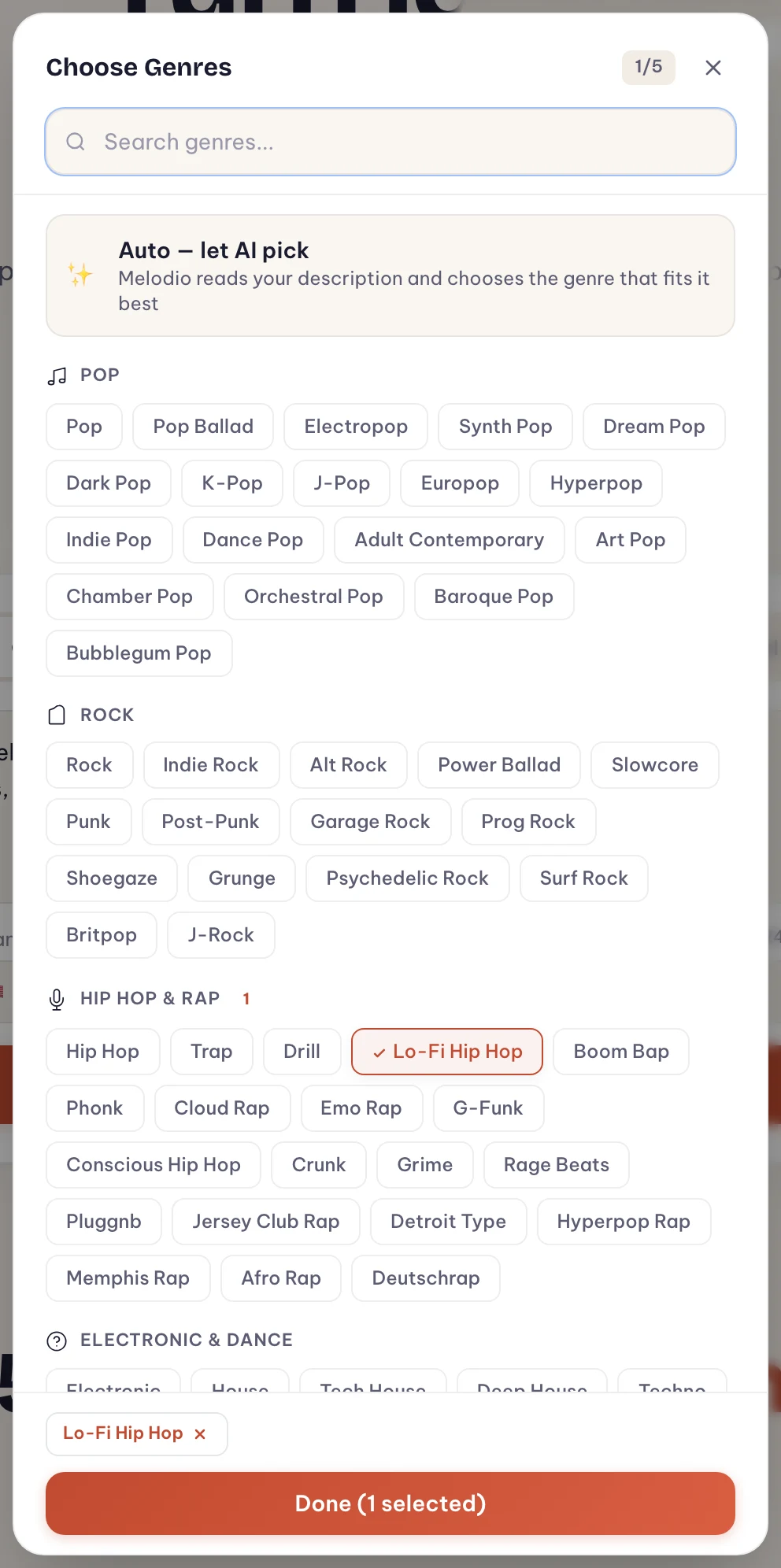
If your mood sits next door to lo-fi, the picker has lanes for that too: Ambient (drop the beat, keep the atmosphere — ideal for sleep), Downtempo (cleaner, a little more motion), and Trip-Hop (darker, moodier, heavier drums). Same texture vocabulary, different room.
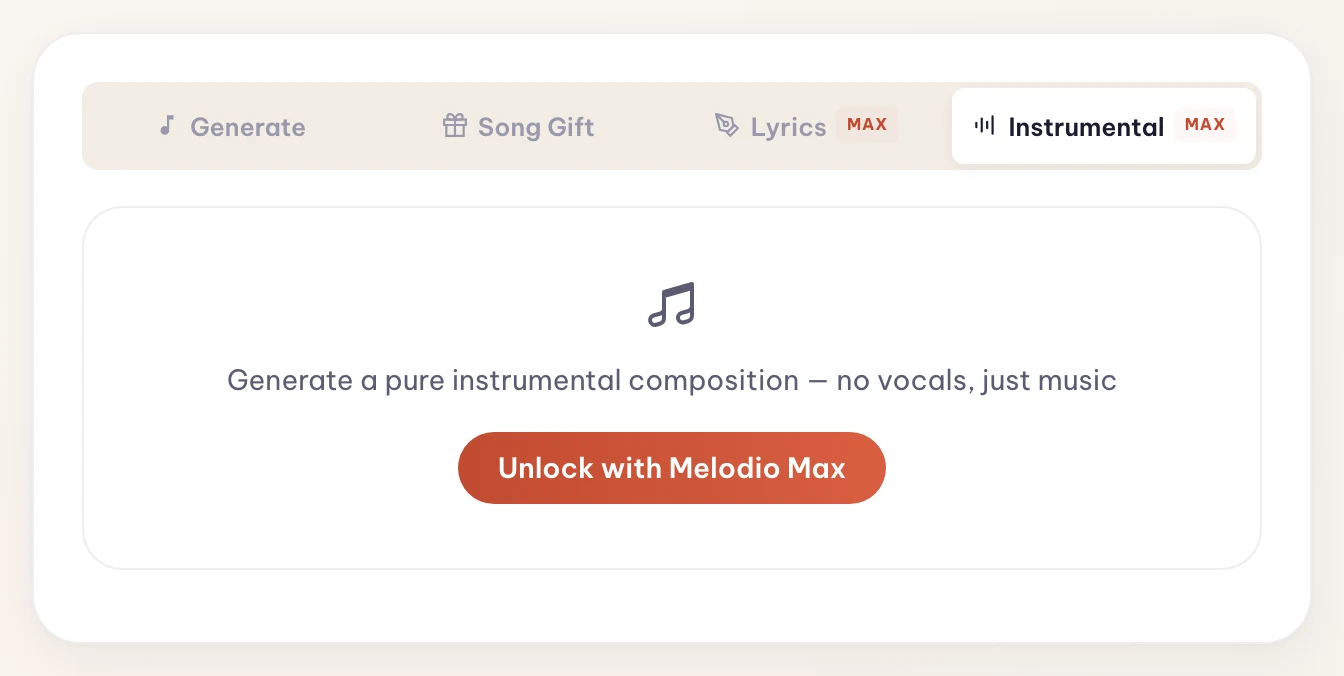
Without vocals: this is what Instrumental mode is for — it skips vocals entirely, so the entire mix budget goes to keys, drums, and texture, and it's free to use. For study and work music this is usually the right call. Words pull focus; that's their whole job, and it's exactly what you don't want behind a spreadsheet.
The use-case menu: study, stream, sleep, gift
Here's the thing about lo-fi — people don't just listen to it. They use it. Which means it's worth deciding what yours is for:
- A study or work loop. Instrumental, steady tempo, no surprises. The best AI study music is the track you stop noticing after thirty seconds.
- Stream and YouTube background you own outright. A stock loop has been licensed by a thousand other channels; your unlocked Melodio track downloads with no watermark and is yours to use anywhere. There's no library or label behind it to flag your VOD — it exists because you described it.
- Sleep and wind-down. Slide toward the Ambient lane, slow the tempo, swap drums for rain. Softer everything.
- A gift beat. "A lo-fi song named after her cat" is a real genre of present now, and it costs you one sentence. If you want a whispered verse and the words won't come, the songwriting assistant can rough out lyrics before you generate.
Building a longer session, not just one track
One three-minute beat won't cover a study session. The move is a brief family: write one solid prompt, then generate a few takes with one element rotated each time — swap the rain for café murmur, the Rhodes for jazz guitar, nudge the tempo.
Every generation gives you two versions of the song, so three variations of one brief already puts six takes on the table. Each has a free preview — listen through, keep the two or three that sit well together.
Then take your favorite and Extend it. That's how a one-idea beat becomes the long, seamless stretch a work session actually needs.
“One brief, small rotations, extend the winner.
”
The new shortcuts: mic, Enhance, and ✨ Auto
Three recent additions to the create page fit lo-fi almost suspiciously well:
- The mic button. It's midnight, the idea is "slow beat, rain, piano, sleepy," and typing feels like work. Mumble it into the prompt box instead. A dictated half-sentence is a perfectly valid lo-fi brief.
- Enhance. Typed "chill beat pls" and know it's thin? One tap rewrites it into a proper brief — textures, tempo, mood — which you can still edit before generating.
- ✨ Auto. Torn between Lo-Fi Hip Hop, Downtempo, and Ambient? Pick Auto in the genre picker and the AI reads your description and chooses the lane itself. For a genre family this blurry at the edges, letting the brief decide is often the honest answer.
Hear the 2am study beat, exactly as prompted
Prompt number one below isn't hypothetical — we ran it word for word and kept the take. Four textures, a tempo, and a job description ("stays out of the way"), and this came back:
The brief: “A slow instrumental lo-fi beat for studying at 2am — 75 BPM, dusty Rhodes chords, soft snare brushes, vinyl crackle, rain against the window. No vocals, nothing dramatic, a loop that stays out of the way.”
Open in Melodio →Every texture you can name, you can hear: the crackle under the keys, the brushes keeping time, the rain sitting behind it all. That's the whole vocabulary lesson in two minutes.
Three lo-fi prompts to steal
Copy, tweak the details, generate:
- The 2am study beat: "A slow instrumental lo-fi beat for studying at 2am — 75 BPM, dusty Rhodes chords, soft snare brushes, vinyl crackle, rain against the window. No vocals, nothing dramatic, a loop that stays out of the way."
- The Sunday coffee-shop loop: "A warm lo-fi hip hop loop for a slow Sunday morning — lazy jazz guitar, muted upright bass, tape hiss, the murmur of a small café, around 80 BPM. Gentle and a little nostalgic."
- The gift beat: "A cozy lo-fi song for my girlfriend Maya and her cat Biscuit — soft female vocals barely above a whisper, mentions late-night reading and tea going cold, purring somewhere in the mix. Slow, warm, affectionate."
Same rule as any genre: the prompts that work name a who, a when, and a texture. "Chill" is not a detail. "Tea going cold" is.
Common lo-fi mistakes
- Over-stuffing textures. Vinyl and tape and rain and fireplace and café noise is not cozy, it's mud. Three or four, maximum.
- Tempo too high. Past 90 BPM you've left lo-fi and wandered into something that wants attention. Stay around 70–85.
- Expecting a drop. Lo-fi doesn't build and release — it settles. If you're waiting for the beat to "hit," you want Trip-Hop or Downtempo, and the genre picker has both.
- Full vocals on study music. If you can sing along to it, you can't work to it. Instrumental mode, or vocals mixed down to a whisper.
Your first beat is a minute away
Lo-fi forgives everything except overthinking. Pick three textures, type a tempo, decide vocals or not — and let the genre's whole aesthetic of comfortable imperfection work in your favor.
Make your first lo-fi beat free
Describe the rain, the keys, and the hour of night — hear your own study beat in about a minute.
Start creating